

Blog
The Artificial Flower Wedding Bouquet Guide UK Brides Actually Need: Materials, Suppliers, and What Nobody Tells You

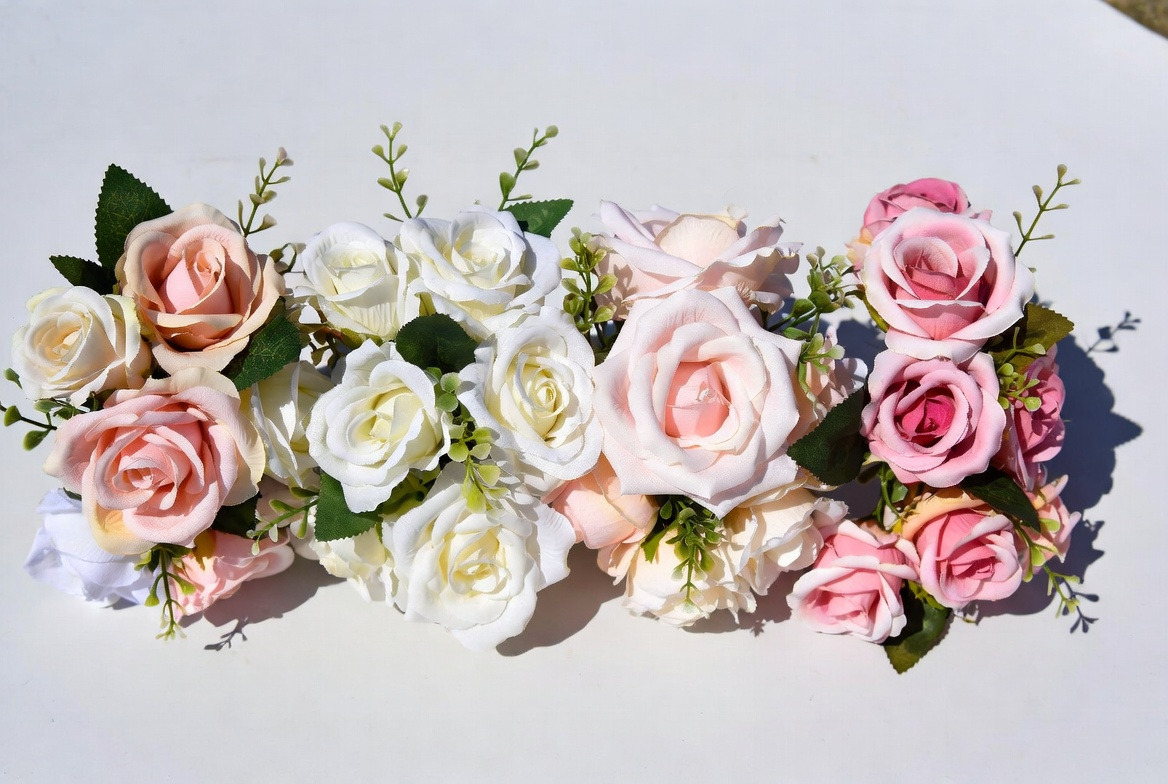
A bride spent £340 on an artificial wedding bouquet package she’d seen look stunning in someone else’s wedding photos, and in her own pictures, it looked like a supermarket display. Same supplier. Same flowers. The difference? The original shoot used diffused flash that forgave the plastic sheen of cheap polyester petals. Her outdoor July ceremony did not.
Artificial flowers wedding bouquets in the UK have never looked better at the top end, but the quality range has never been wider. This guide goes beyond a list of shops to explain the material decisions, supplier red flags, and package-building logic that determine whether your artificial bouquet is indistinguishable from fresh or obviously fake. By the end, you’ll know exactly what to order, what questions to ask, and what most brides only discover after it’s too late.
What “Artificial Flowers” Actually Means and Why the Category Is Wildly Misleading
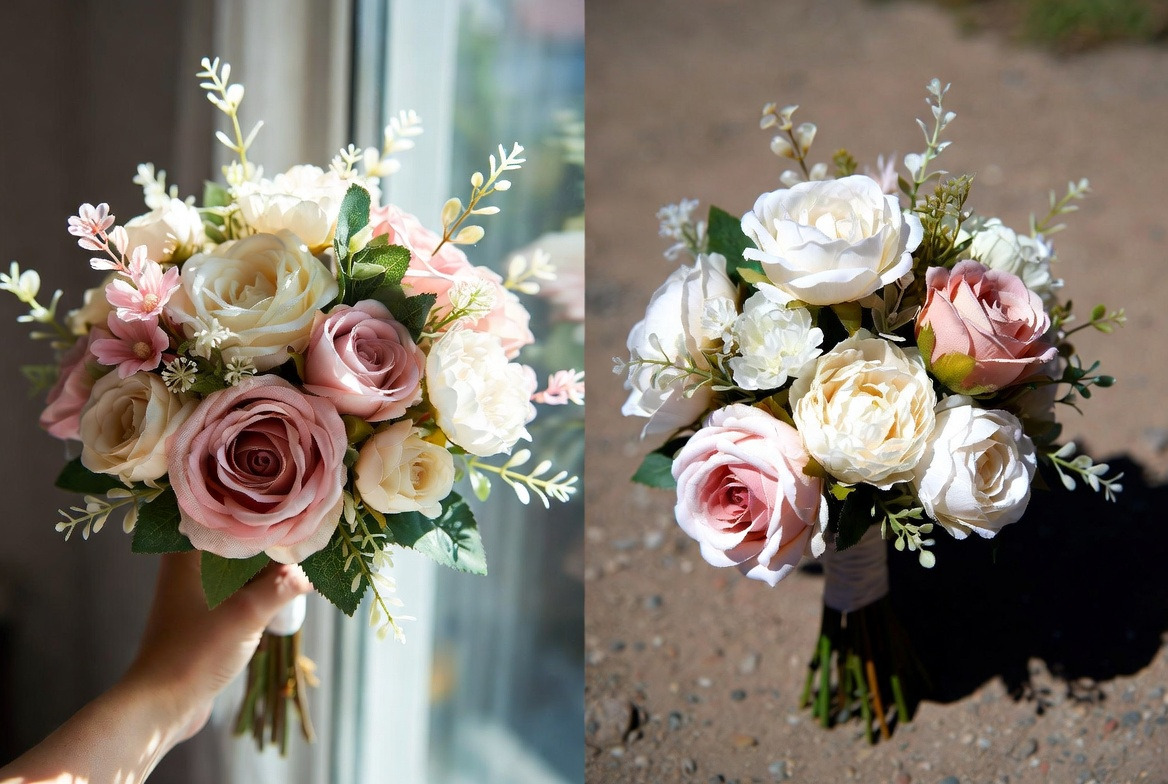
The phrase “artificial wedding flowers UK” currently covers at least four completely different products that look nothing alike in person or in photographs. The material is everything. Price and supplier reputation are secondary.
Polyester flowers are the most common and cheapest to manufacture. The petals are moulded, feel smooth and slightly rigid, and reflect light uniformly. This uniform reflection is what makes them read as synthetic in photographs, particularly in direct sunlight or near windows, where the surface sheen becomes obvious. These are the flowers filling most Amazon listings and budget Etsy shops.
Silk flowers (genuine woven silk or silk-blend) have a soft, slightly irregular surface that mimics the way natural petals absorb and scatter light rather than bouncing it back at a single angle. They are harder to source and considerably more expensive. Crucially, “silk” is used as a marketing term by many UK suppliers who mean polyester. If you see “silk” in a product title, ask specifically whether the material is woven fabric or moulded plastic before ordering.
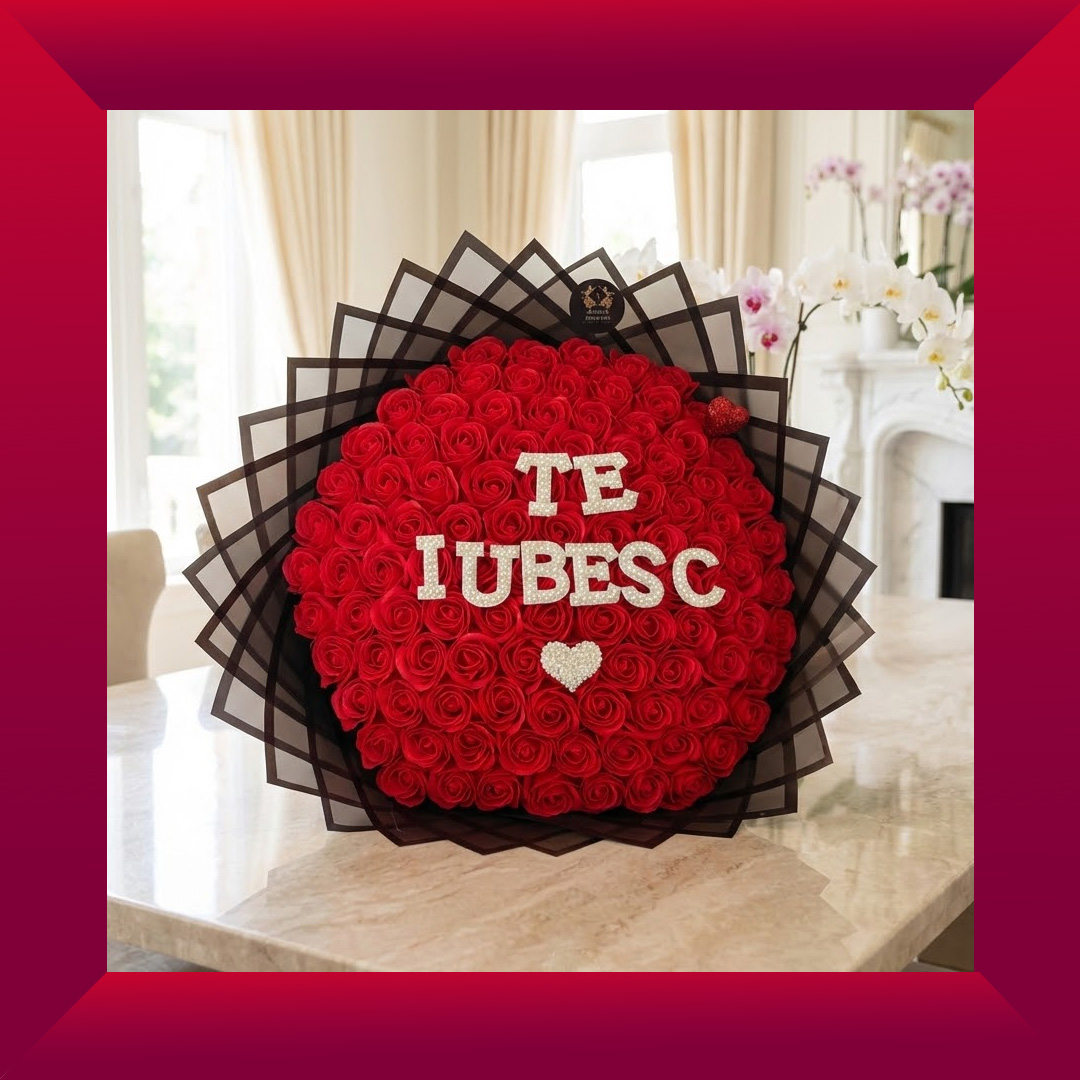
Foam flowers (PE foam or cold porcelain) are the current standard in premium artificial wedding flowers. Petals are individually formed, slightly translucent at the edges, and have the weight and give of real blooms. High-end foam roses can genuinely be mistaken for fresh in professional photographs. UK specialists and the best Etsy makers typically work in this tier.
Latex-coated flowers use a rubber-based coating over a fabric or foam core, producing a slightly waxy finish that works well for tropical flowers and succulents but is less convincing for soft blooms like peonies or garden roses.
The practical implication: two bouquets at identical price points can produce completely different results on your wedding day based solely on which of these materials they use. Ask for the material specification, not just a product photograph, before placing any order.
The Decision Most UK Brides Get Wrong When Choosing Artificial Wedding Flowers
The most common mistake isn’t choosing artificial over fresh; it’s ordering based on photography without accounting for your specific lighting conditions.
Every compelling photo of an artificial wedding bouquet you’ve seen on Pinterest or Instagram was taken under specific lighting chosen by the photographer. Diffused studio flash, overcast outdoor light, and shaded indoor spaces all flatten the reflective sheen that makes polyester petals look plastic. Direct sunlight, harsh on-camera flash, and certain warm tungsten venue lighting do the opposite; they expose exactly what budget artificial flowers are made of.
Consider a bride marrying at a bright, south-facing barn venue in Surrey in July. She’d ordered a polyester bouquet that looked flawless in the supplier’s product photos taken in a controlled studio. In her own ceremony photos, shot largely in direct afternoon sunlight, the petals caught the light and looked unmistakably synthetic. She’d never thought to test how her venue’s specific lighting would interact with the material. Before committing to any artificial flower supplier, do this: order a single stem sample (most reputable UK suppliers offer these for a small fee) and take it to your venue at the same time of day your ceremony will take place. Photograph it on your phone. The result tells you more than any product listing or supplier review.
Colour is a second variable that rarely gets mentioned. Artificial flowers are dyed, and dyes respond differently to different light sources. A bouquet that reads as blush pink under natural daylight can shift to ivory under warm tungsten venue lighting. A physical sample test, in your venue, under your venue’s lighting, is non-negotiable for high-stakes colour matching.
How to Evaluate and Choose Your Artificial Wedding Flowers Package
Rather than scrolling supplier pages until something looks right, use this three-factor framework before placing any order. The framework applies whether you’re buying a single bridal bouquet or a full wedding artificial flowers package.
1. Decide on the material tier before the aesthetics. Match the material to your venue and photography style. Outdoor summer weddings with a documentary photographer require foam or genuine high-quality silk. Indoor evening receptions with controlled lighting give you more flexibility. Budget polyester should be reserved for table décor and background areas — not the bouquet that will appear in every ceremony photograph.
2. Prioritise package cohesion over individual pieces. Your bridal bouquet, bridesmaids’ posies, buttonholes, and flower crowns must come from the same supplier using the same dye batch. Colour variance between artificial flowers from different manufacturers — even when both are labelled “dusty rose” or “ivory” is almost guaranteed. It shows in photographs. One supplier, one order, entire package.
3. Check lead time and returns policy before anything else. UK artificial flower retailers vary enormously. Premium Etsy makers often work to 3–4 week lead times at minimum; established retailers may quote 6–8 weeks during peak wedding season. On bespoke items, the UK Consumer Rights Act does not automatically entitle you to a return if the item matches its description — so examine the returns policy before ordering, not after.
| Option | Best For | Key Tradeoff |
| Premium UK Etsy maker (foam/silk) | Custom designs, exact colour matching | Higher cost, longer lead time |
| Established UK artificial flower retailer | Consistent packages with predictable quality | Less customisation, stock colours only |
| Budget polyester (Amazon / generic Etsy) | Table décor, periphery areas not in close shots | Poor performance in direct or harsh light |
| DIY from wholesale stems | Maximum control, lowest cost per stem | Significant time investment and skill required |
| Mixed fresh and artificial | Premium look for key flowers, affordability elsewhere | Coordination complexity across two suppliers |
What Changes Depending on Your Circumstances
Artificial wedding flowers are not a single decision; several variables shift the right answer significantly.
Venue type and natural light. Outdoor summer venues with abundant natural light are the most demanding environment for artificial flower quality. A dark, atmospheric barn or candlelit castle is far more forgiving if your venue is the former; budget only for foam or genuine silk. If the latter, you have meaningful flexibility on the material tier without visible consequence.
Booking lead time. Premium UK artificial flower makers, particularly bespoke Etsy studios, can book up months ahead for the May–September peak wedding window. Brides marrying in this period should place orders 4–6 months in advance. Eight weeks before a May wedding is frequently too late for a handcrafted bouquet from a specialist maker.
Destination weddings. A significant portion of UK brides those marrying in Cyprus, Italy, Greece, or Portugal choose artificial wedding flower packages specifically because the flowers travel without wilting and eliminate the cost and risk of overseas fresh flower logistics. For this group, quality tier matters even more, since photographs are the primary way friends and family experience the day.
Allergy and venue restrictions. Some venues, particularly heritage properties, indoor conservatories, and those with catering arrangements involving pollen-sensitive guests, have policies on fresh flowers. Artificial flowers satisfy these restrictions universally. If this applies to you, document it when communicating with your venue to confirm that artificial arrangements are explicitly permitted.
Sustainability priorities. The environmental case for artificial flowers is more nuanced than most marketing suggests. A high-quality foam or silk bouquet kept as a keepsake for decades has a demonstrably better environmental profile than a fresh bouquet flown from Kenya or the Netherlands. A cheap polyester bouquet discarded after the wedding does not. The material tier and your intended use matter as much as the artificial vs fresh distinction when weighing environmental impact.
Common Mistakes That Make Artificial Wedding Flowers Look Fake
Mixing suppliers across a package. Colour-matching between different artificial flower manufacturers is functionally impossible without physical samples from both. Even when labelled identically, dye formulations differ. Ordering your bouquet from one supplier and buttonholes from another almost always produces visible colour discrepancies in photographs a mismatch that has no equivalent with fresh flowers from a single florist.
Skipping the sample stage. UK artificial flower retailers who don’t offer samples — or who charge unreasonable amounts for them are a warning sign. A reputable maker sends samples because their product stands up to scrutiny. Bypassing this step to save time is the single most consistent source of regret reported by brides who chose artificial flowers.
Ignoring stem construction. A beautifully made artificial flower head on a poorly constructed stem looks wrong when held. The natural drape and weight of a real bouquet come partly from stem density and flexibility. Ask suppliers specifically how stems are wired, filled, and weighted. Premium makers add structural wire and realistic stem tape to replicate the hand-feel of a fresh arrangement budget suppliers rarely do.
Ordering without photographing the venue. As detailed earlier, the same bouquet can look completely different across lighting environments. Deciding based only on product photos taken in controlled studio conditions is the most avoidable mistake in this category.
Leaving the order too late. Unlike fresh flowers, artificial arrangements have no freshness deadline. But specialist makers have production schedules, and peak season books up fast. Treating “artificial” as synonymous with “easy to get at short notice” is incorrect for the quality tier that actually photographs well.
The Material Tier Nobody in the UK Market Talks About Openly
The gap between mass-produced artificial flowers and what the UK’s best specialist makers produce is genuinely significant, and it’s poorly understood because the terminology is inconsistent across the market.
The highest tier of artificial wedding flowers available in the UK is handcrafted PE foam with individually formed petals. Unlike factory-produced foam flowers (which exist and are a step below), handcrafted pieces are made petal by petal, with each layer shaped using heating tools to create realistic curl, edge veining, and the slight translucency that actual petals have when held to light. The result, photographed by a competent wedding photographer, is routinely mistaken for fresh flowers even by florists looking at prints. These pieces are available primarily through specialist Etsy studios and a small number of dedicated UK artificial flower boutiques. The price reflects the labour involved: expect to pay £180–£350 for a bridal bouquet, which remains substantially less than an equivalent fresh arrangement from a UK florist (typically £400–£700+ in 2025 for a large cascading or garden-style bouquet from an independent florist).
The advantage for UK brides extends beyond aesthetics. A handcrafted foam bouquet stored away from direct sunlight will look identical in twenty years. Fresh flowers require professional freeze-drying, typically costing £350–£600 additionally to achieve the same result, with unpredictable colour preservation. For brides who place value on keeping their wedding bouquet long-term, the cost comparison between artificial wedding flowers packages and fresh flowers shifts considerably when keepsake costs are factored in. Most comparisons in the market ignore this completely.
From the Field: What Your Photographer Knows That Your Supplier Doesn’t
Here is the honest answer that gets left out of every artificial flower guide: your photographer’s shooting style matters as much as the material tier of your flowers.
Photographers who shoot primarily in available natural light, a growing majority in the UK documentary wedding photography market, will almost always produce better results with high-quality artificial flowers than photographers who rely on direct flash. The reverse is also true: surface sheen that is unforgiving in direct sunlight can look entirely convincing under off-camera flash with a diffuser, which effectively recreates the controlled studio conditions in which most supplier product photos are taken.Before finalising your artificial wedding flowers package, have a direct conversation with your photographer. Show them what you’re considering, describe the material tier, and ask specifically how they handle bouquet shots under your venue’s lighting. A good photographer can compensate for material limitations with technique and positioning. This conversation which most brides never have, is more valuable than any amount of supplier research. The photographers who have shot artificial flowers before will tell you immediately which suppliers’ products hold up and which don’t.