

Blog
Bridal Party Bouquet Ideas: 10 Coordinated Styles

Bridal party bouquets feel like a small pick. But they show up in almost every wedding photo. That’s true from the walk down the aisle to the group shots outside. Get the bride’s bouquet right, but leave the bridesmaids off, and the whole look feels wrong.
This guide is for UK couples. It walks you through ten real bouquet styles. You’ll get a simple plan for your florist chat, plus a UK flower guide by season. There’s also a real wedding case study, and tips on when to book a custom bridal bouquet consultation so nothing gets rushed.
What Coordinated Bridal Party Bouquets Actually Mean
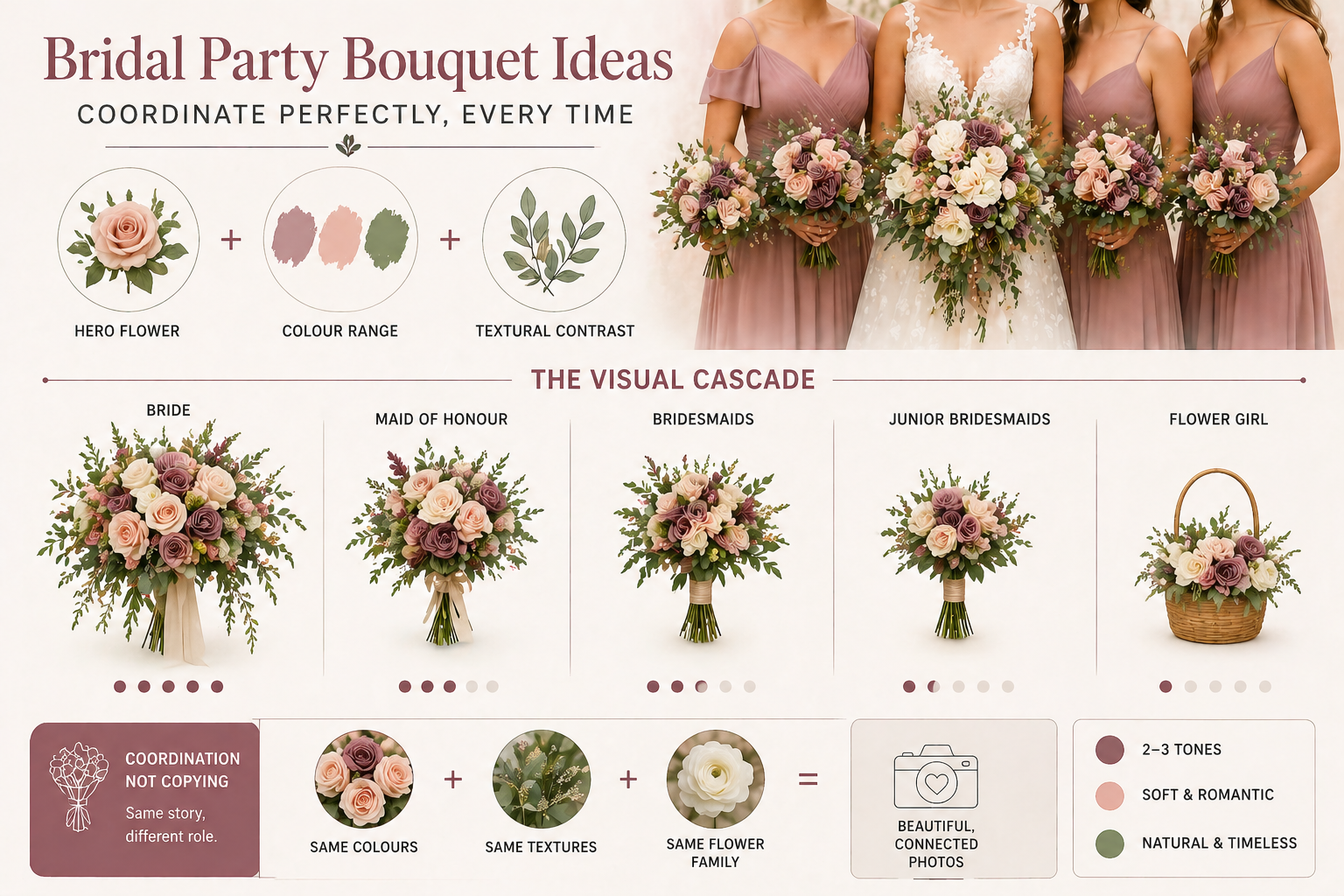
Coordinated bouquets share a look. They don’t need to be copies of each other. The bride’s bouquet sets the color and the size. Bridesmaid bouquets echo that. They do it with a smaller size, a simpler shape, or a slightly different mix of flowers.
Three choices anchor the whole look. First, pick a hero flower. It should appear in every bouquet, right down to the flower girl’s basket. Second, pick a color range. Stick to two or three main tones pulled from a luxury flower bouquet color palette, not one flat color. Third, pick a texture layer. This is usually leaves or filler. It ties every bouquet together, even when the flower mix shifts a bit.
The maid of honor sits in the middle. Her bouquet is a touch bigger than the bridesmaids’. But it stays simpler than the bride’s. This order reads clearly in photos. It gives the eye a clear path down the aisle.
10 Bridal Party Bouquet Styles That Actually Coordinate
Most guides list five bouquet styles and stop there. Here are ten real options instead. Each one has its own shape and mood. Pick styles that fit your dress, venue, and budget. Skip the same round posy ten times over.
- Cascade or trailing bouquet. Flowers and leaves flow down past the hand tie. This makes a bold, formal shape. A luxury bridal rose bouquet in a cascade style works well for the bride or a ballgown dress.
- Round posy. A tight, round shape made from one or two flower types. This is the most flexible style. It suits almost any dress shape.
- Hand-tied loose or garden style. Looser stems, visible leaves, and an easy feel. Popular for barn and outdoor UK weddings.
- Teardrop bouquet. A round posy with a soft trailing point at the bottom. It gives a softer, longer line than a plain round shape.
- Pomander or nosegay. A small, ball-shaped bunch. Flower girls often carry these. They also work as small bridesmaid bouquets.
- Single-stem or minimalist bouquet. One bold bloom, like a classic red rose wedding bouquet or amaryllis, tied with ribbon. It’s a bold, modern look.
- Wildflower meadow style. A mix of textures and uneven stem lengths. It looks like a hand-picked field bunch. Great for relaxed, boho venues.
- Dried flower bouquet. Built from pampas, lunaria, or dried grasses in place of fresh blooms. It lasts longer, costs less, and pairs well with our artificial wedding bouquets UK range for a no-wilt option.
- All-foliage or leaf-first bouquet. Built mostly from greenery, like eucalyptus, ruscus, or olive branches, with a few accent blooms. Our luxury artificial wedding bouquets UK collection offers this look with zero upkeep.
- Posy with a trailing ribbon. A round or teardrop posy with long ribbon tails that fall below the flowers. It adds movement without the weight of a full cascade.
Want to see how these look in real colors first? Browse a florist’s custom bridal bouquet creation service page before you pick a style.
Matching Bouquet Style to Dress Shape
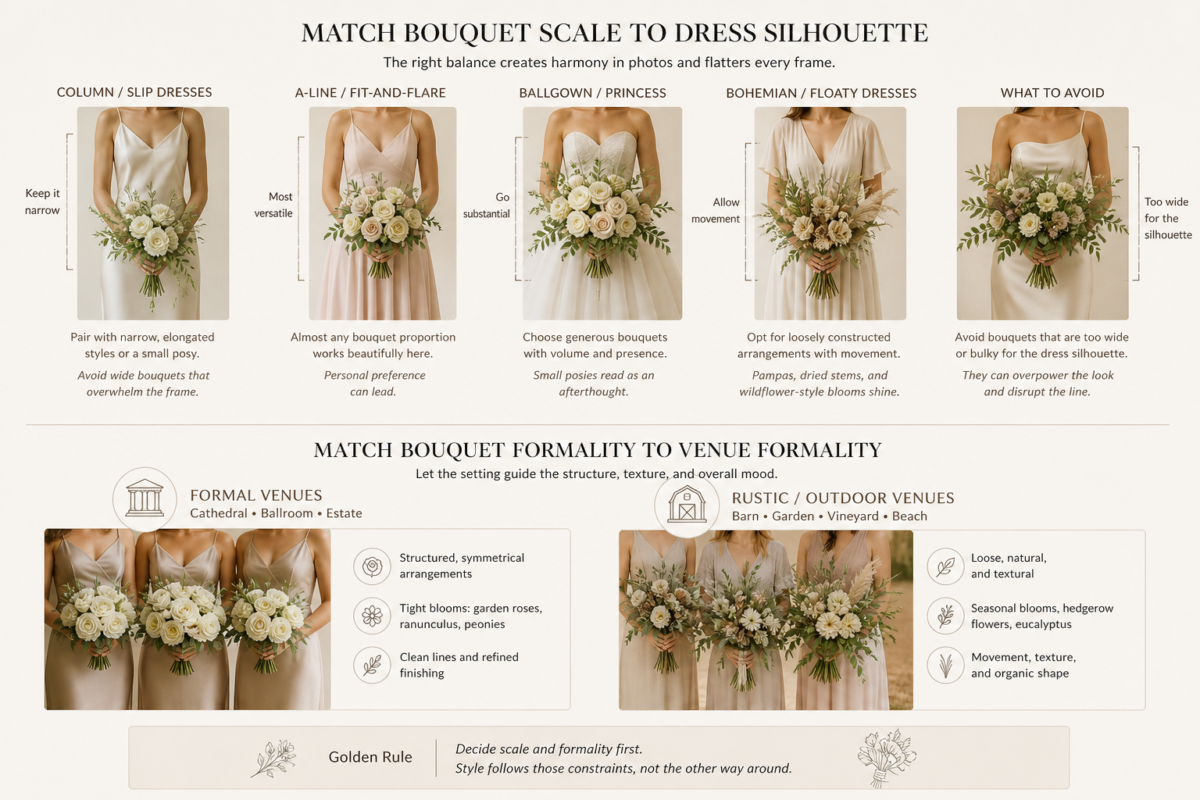
Bouquet size needs to match dress volume. Get this wrong, and photos look off. A loose wildflower posy can vanish next to a full ballgown. A tight round bouquet can look too small next to a slim column dress.
|
Dress Shape |
Bouquet Styles That Work |
Why |
|---|---|---|
|
Column or slip dress |
Single-stem, teardrop, narrow cascade |
Long, slim lines match the dress’s slim shape |
|
A-line or fit-and-flare |
Round posy, hand-tied loose, pomander |
Most flexible shape, works with nearly any bouquet size |
|
Ballgown or princess |
Cascade, larger round posy, leaf-first bouquet |
Full skirts need a bouquet with real visual weight |
|
Boho or flowing dress |
Wildflower meadow, dried flower, all-foliage |
Loose, free shapes match the dress’s flow |
Venue style matters too, just as much as the dress. A formal cathedral wedding usually calls for neat, even bouquets. Think garden roses and ranunculus. A barn or marquee wedding suits looser, leafier work instead. Think eucalyptus, dried grasses, and trailing ribbon. A luxury bridal rose bouquet for UK weddings can suit both. Just ask for a looser hand-tie finish.
A Step-by-Step Framework to Brief Your Florist
Build your bridal party bouquets in order. Start with the bride and work outward. Don’t treat each bouquet as its own choice.
- Anchor the bride’s bouquet first. This is the largest, most detailed bouquet. It sets the ceiling for everything else. Choose the shape, hero flower, and one or two extra blooms.
- Build the maid of honor’s bouquet next. Use the same hero flower. Drop one extra bloom and cut the size a little. It should read as an upgraded bridesmaid bouquet.
- Brief the bridesmaid bouquets. Keep the hero flower. Make the shape simpler. Aim for roughly 60 to 70 percent of the bride’s bouquet size.
- Plan the flower girl’s basket last. A small posy or loose petal basket works well. Use the same hero flower, or one matching bloom.
Some bridesmaids can’t make it to a fitting in person. In that case, a florist’s artificial bridesmaid bouquets range lets you test this order first.
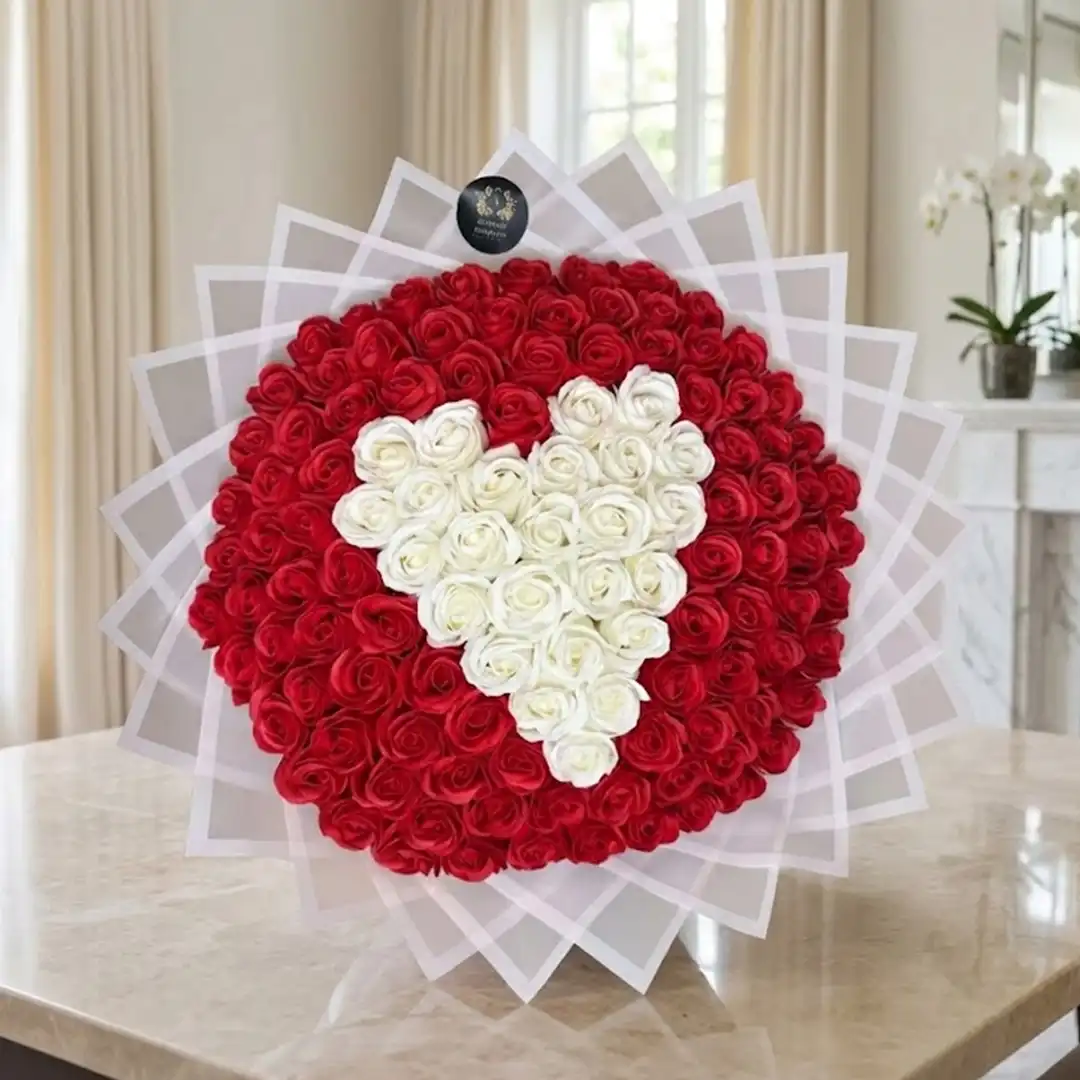
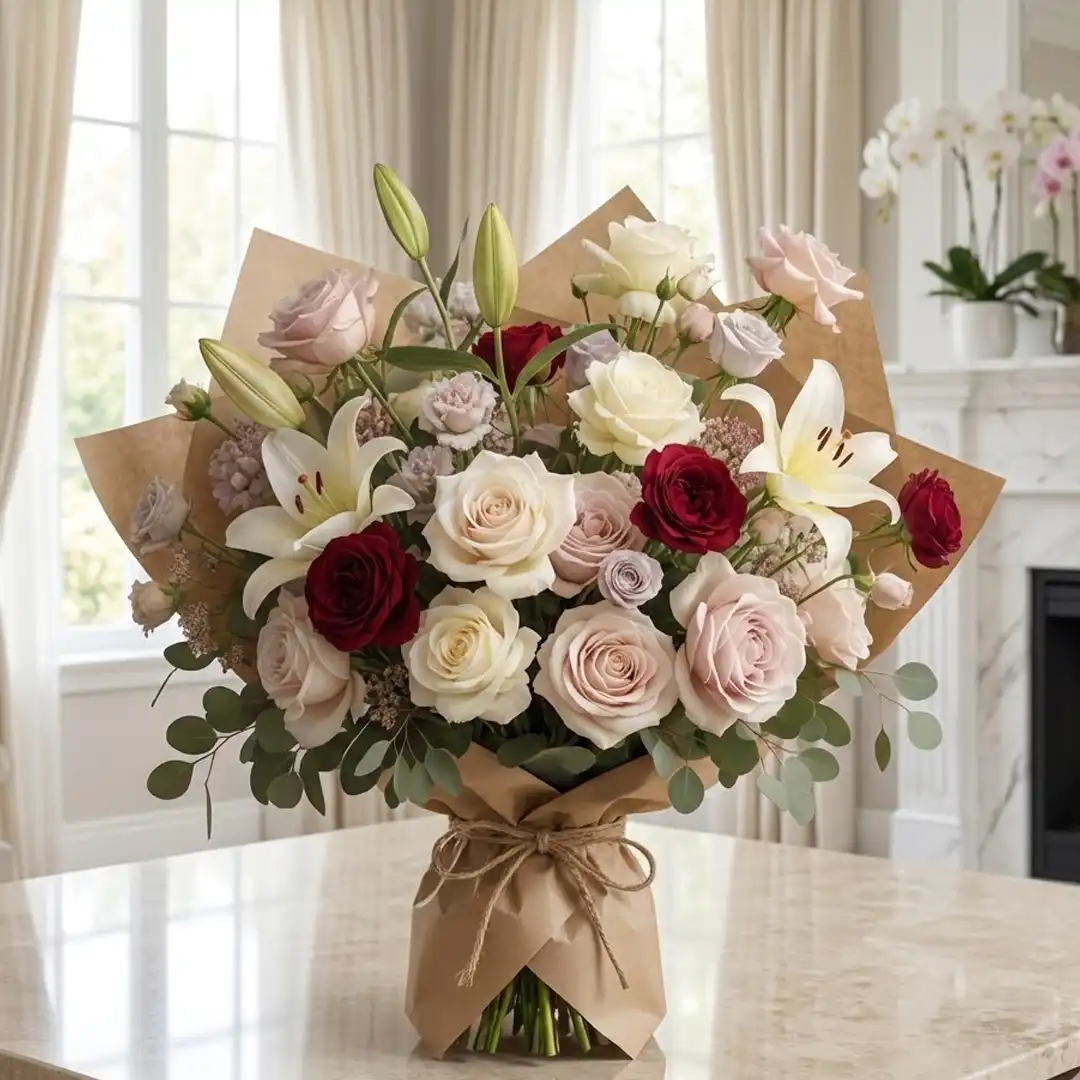
A Cotswolds Barn Wedding on a Mid-Range Budget
Here’s how this plan played out for a real autumn barn wedding in the Cotswolds. The bridal party had six bridesmaids. The full bouquet budget stayed under £600. Two bridesmaids lived abroad and couldn’t attend a fitting, so the florist used artificial bridesmaid bouquets for a barn wedding preview to confirm the size and color before the fresh order went in.
The bride picked amaryllis as her hero flower. She paired it with burgundy dahlias and trailing eucalyptus in a loose, hand-tied cascade. Amaryllis and dahlias are both in season in the UK in autumn. So the florist skipped the import costs that come with peonies or garden roses out of season.
The maid of honor carried a smaller round posy. It used the same amaryllis and dahlia mix, minus the trailing eucalyptus, tied with the same burgundy ribbon. The six bridesmaids carried simple posies of just burgundy dahlias, with a short eucalyptus collar for texture. This kept costs down for the largest group. It still tied every bouquet back to the bride’s through color and the shared eucalyptus.
|
Role |
Hero Flower |
Secondary Elements |
Approx. Cost (UK, autumn) |
|---|---|---|---|
|
Bride |
Amaryllis |
Burgundy dahlias, trailing eucalyptus |
£180-£250 |
|
Maid of honor |
Amaryllis |
Burgundy dahlias |
£70-£90 |
|
Bridesmaids (x6) |
Dahlias |
Eucalyptus collar |
£35-£45 each |
|
Flower girl |
Dahlia petals |
Loose basket |
£25-£35 |
One detail almost got missed. Amaryllis stems are hollow. They need a wire inside for support, so they take longer to prep than solid stems. Adding that extra prep time to the order avoided a last-minute rush. You only learn tricks like this by actually building and pricing a bridal party set. A style list alone won’t teach you that.
What Changes by Season, Venue, and Budget
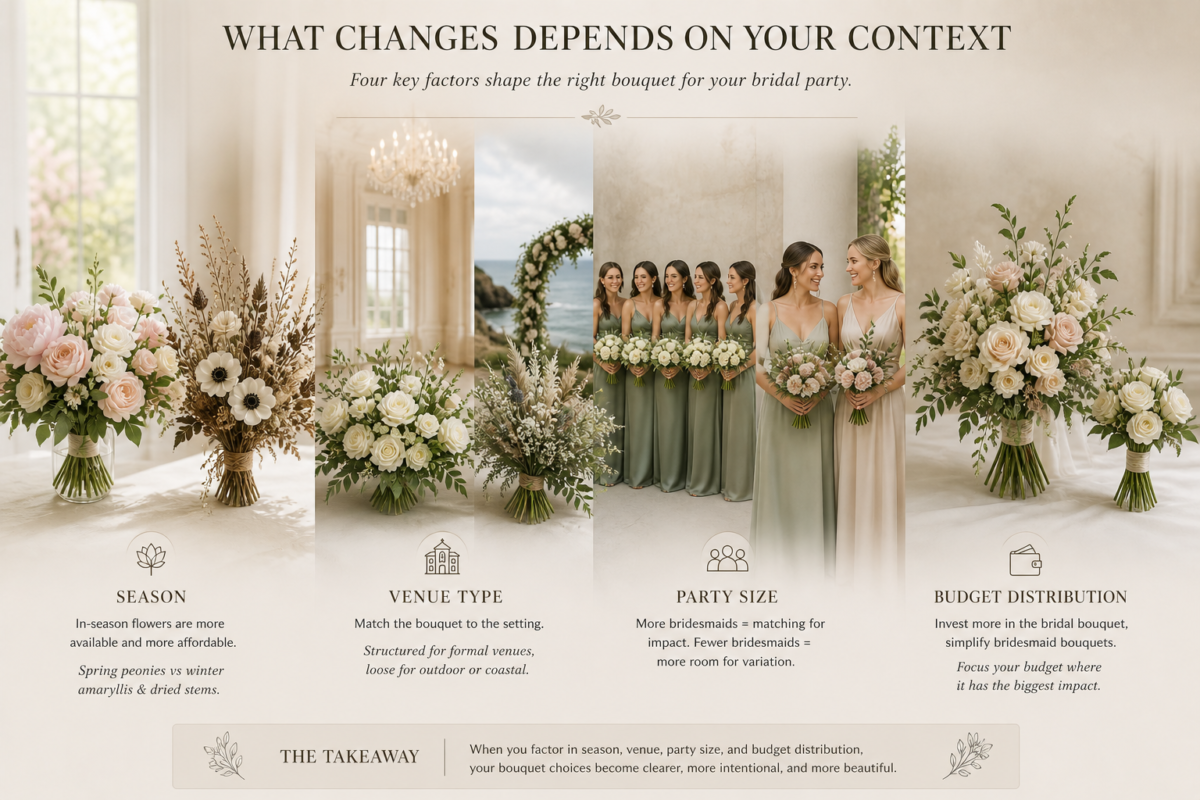
UK wedding flower choices shift a lot by season. The biggest cost jumps come from ordering blooms outside their natural UK growing window. Peonies, sweet peas, and garden roses cost more outside spring and early summer, so check a spring wedding flowers UK collection if your date falls in that window.
That’s because they need to be imported. Autumn and winter weddings do better with hellebores, anemones, amaryllis, and dried stems from our artificial wedding bouquets range. These are usually UK-grown and cost less. For the exact blooms in season each month, check a seasonal UK wedding flowers guide before you brief your florist.
Coastal and countryside UK venues need different stems, not just different colors. Coastal venues need wind-tough flowers with sturdy stems. Think gypsophila, protea, or thistles. Soft sweet peas wilt fast in sea air. Country estates and barns suit fuller, tighter bouquets. They hold up better against a rustic backdrop.
Party size changes how much variety a bridal party can carry. A group of six or more bridesmaids looks best with strong repeats. Too much variety across a large group starts to look like an accident. Smaller parties of two or three bridesmaids have more room to vary bouquet size and shape. They can still look coordinated.
On a tight budget, put the detail into the bride’s bouquet. Keep it simple everywhere else. A single-variety posy of white ranunculus or garden roses for bridesmaids reads as a choice, not a shortcut. Some couples also mix in a few budget-friendly luxury artificial wedding bouquets stems to stretch a tight budget further without losing the look. This works even better when it’s tied with the same ribbon as the bride’s bouquet.
Common Bridal Bouquet Mistakes (and What They Actually Cost You)
Most bridal party bouquet problems trace back to a few easy-to-avoid mistakes. Most of them cost time or choice, not just money.
- Booking florals too late. Top UK wedding florists often book up 12 to 18 months ahead. Wait until six months out, and you mostly lose your pick of florist and flower, not extra cash.
- Sending only a Pinterest board. Mood boards show a general feel, but florists need details. Give them a bouquet count, rough sizes, flowers to use or avoid, dress colors, and venue type. Browse a UK wedding flowers collection page next to your Pinterest board. It gives the florist something real to quote against.
- Locking in flowers before checking the season. Picking peonies for a January wedding, before you check if they’re in season, often leads to an awkward quote chat. Ask your florist for in-season swaps early. Many are grown right here and cost less.
- Skipping the texture layer. Bouquets built from just one or two flower types, with no leaves or filler, tend to look flat in photos. Eucalyptus, ruscus, astilbe, and gypsophila all add contrast. That contrast makes the hero flower stand out more.
- Ignoring the ribbon and stem finish. The stem wrap shows up in nearly every photo of the day, from getting-ready shots to the final send-off. A matching ribbon or twine finish ties the whole bridal party together, even when bouquet shapes vary. A classic red rose bouquet guide example with mismatched ribbon across the party can look off, even when each bouquet looks fine on its own.
Final Thoughts
Coordinated bridal party bouquets come down to a system, not one single choice. Pick a hero flower, a color range, and a texture layer first. Then build outward from the bride’s bouquet, through the maid of honor, the bridesmaids, and the flower girl. Match your bouquet style to your dress shape and venue style. Lean on in-season UK flowers to keep both cost and quality on your side.
Whichever of the ten styles above catches your eye, bring a clear brief to your florist, not just a mood board. Want to see how these styles look in real bouquets first? Browse a luxury flower bouquets UK or spring flowers for bridal bouquets page before your first meeting, or go straight to book a custom wedding bouquet design if you already know your hero flower. It makes that meeting far more useful, and helps your florist turn your ideas into a bridal party that looks great from every angle.