
Blog
The Red Rose Flower Bouquet Buyer’s Guide: Stem Count, Occasion Matching, and Making Them Last

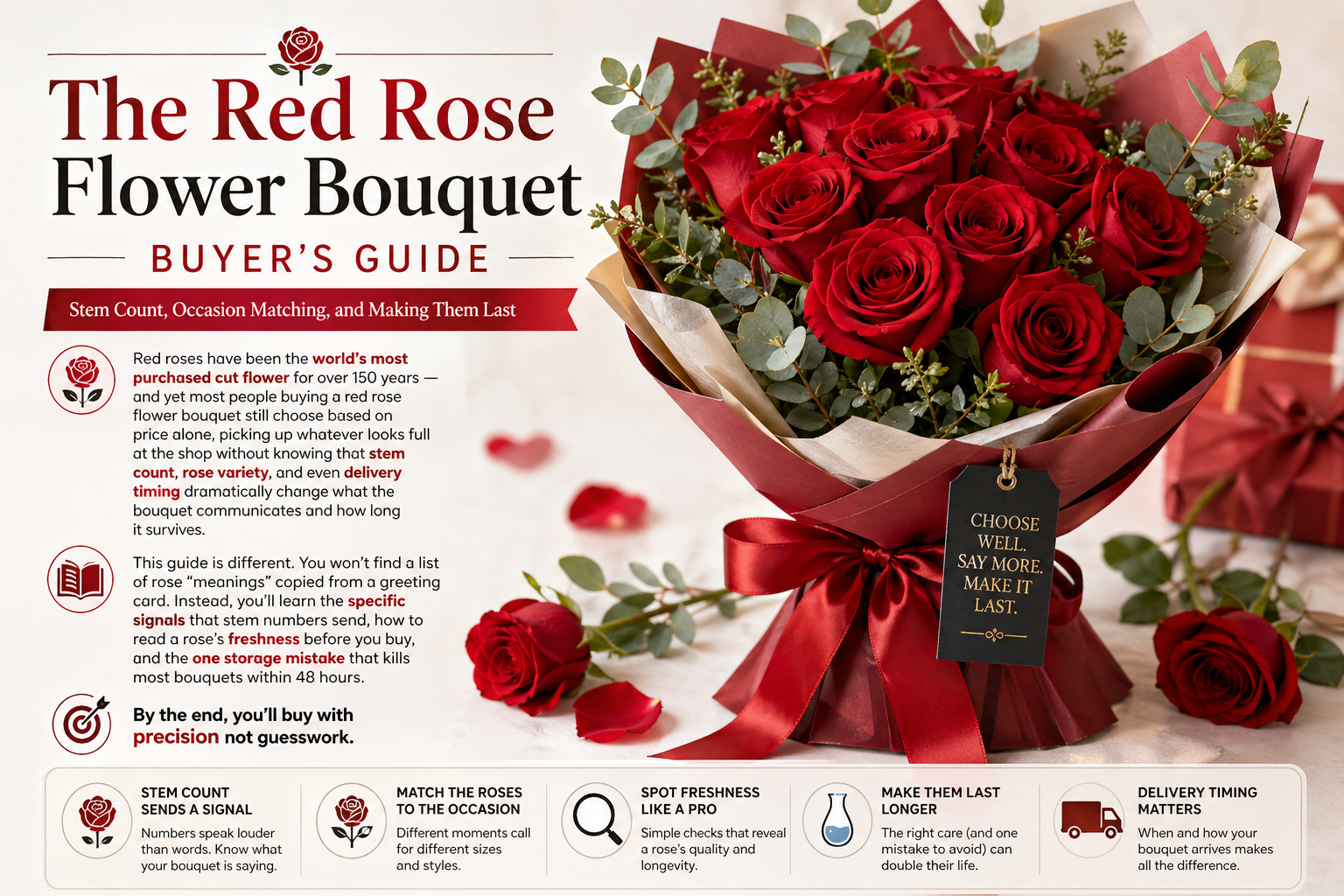
Red roses have been the world’s most purchased cut flower for over 150 years, and yet most people buying a red rose flower bouquet still choose based on price alone, picking up whatever looks full at the shop without knowing that stem count, rose variety, and even delivery timing dramatically change what the bouquet communicates and how long it survives.
This guide is different. You won’t find a list of rose “meanings” copied from a greeting card. Instead, you’ll learn the specific signals that stem numbers send, how to read a rose’s freshness before you buy, and the one storage mistake that kills most bouquets within 48 hours. By the end, you’ll buy with precision, not guesswork.
What a Red Rose Bouquet Actually Communicates (It’s More Coded Than You Think)
Most people assume a red rose means “I love you” and stop there. That’s accurate but incomplete. The bouquet of flowers, red roses, carries a layered language rooted in Victorian floriography a system where flower type, color, and quantity each sent a distinct social signal.
That system never fully disappeared. A single red rose still reads as intimate and deliberate. Six roses suggest affection and the early stages of romance, appropriate for a new relationship without the weight of a dozen. Twelve red roses are the cultural standard for romantic love, widely understood across Western and many Asian cultures as a declaration. Twenty-four signals devotion; fifty or more is reserved for milestone events, a 25th anniversary, a wedding, a grand gesture.
The variety matters too. Hybrid tea roses, with their high-centered blooms and long stems, are the classic florist rose, formal, structured, unmistakably romantic. Garden roses like the David Austin variety have a looser, fuller bloom that reads as softer and more nostalgic, better suited to weddings or a deeply personal gift than a bold Valentine’s declaration.
One thing most guides omit: the foliage and filler flowers in a red rose arrangement change its register. Baby’s breath alongside red roses now reads as retro or kitschy to younger audiences. Eucalyptus signals a more contemporary aesthetic. Knowing this lets you specify not just accept whatever the florist defaults to.
The Stem-Count Decision Most Buyers Get Wrong
Here’s the mistake that happens constantly: someone orders a “dozen red roses” because it’s the standard, when what the occasion actually called for was something either more intimate or far more dramatic.
A client booking flowers for a third date who sends twelve roses can come across as moving too fast; the dozen carries genuine romantic weight. Six long-stem red roses, arranged cleanly, would read as thoughtful and confident without the intensity. Conversely, someone celebrating a 20-year anniversary with twelve roses from the petrol station is dramatically underdelivering relative to the occasion.
The red roses flower bouquet sizing framework is simple once you know it:
- 1–3 stems: intensely intimate, minimalist, best for hand-delivery
- 6 stems: early romance, friendship milestone, tasteful and measured
- 12 stems: standard romantic declaration, Valentine’s Day, anniversaries up to 10 years
- 24 stems: strong commitment signal, major milestones, high-impact gifting
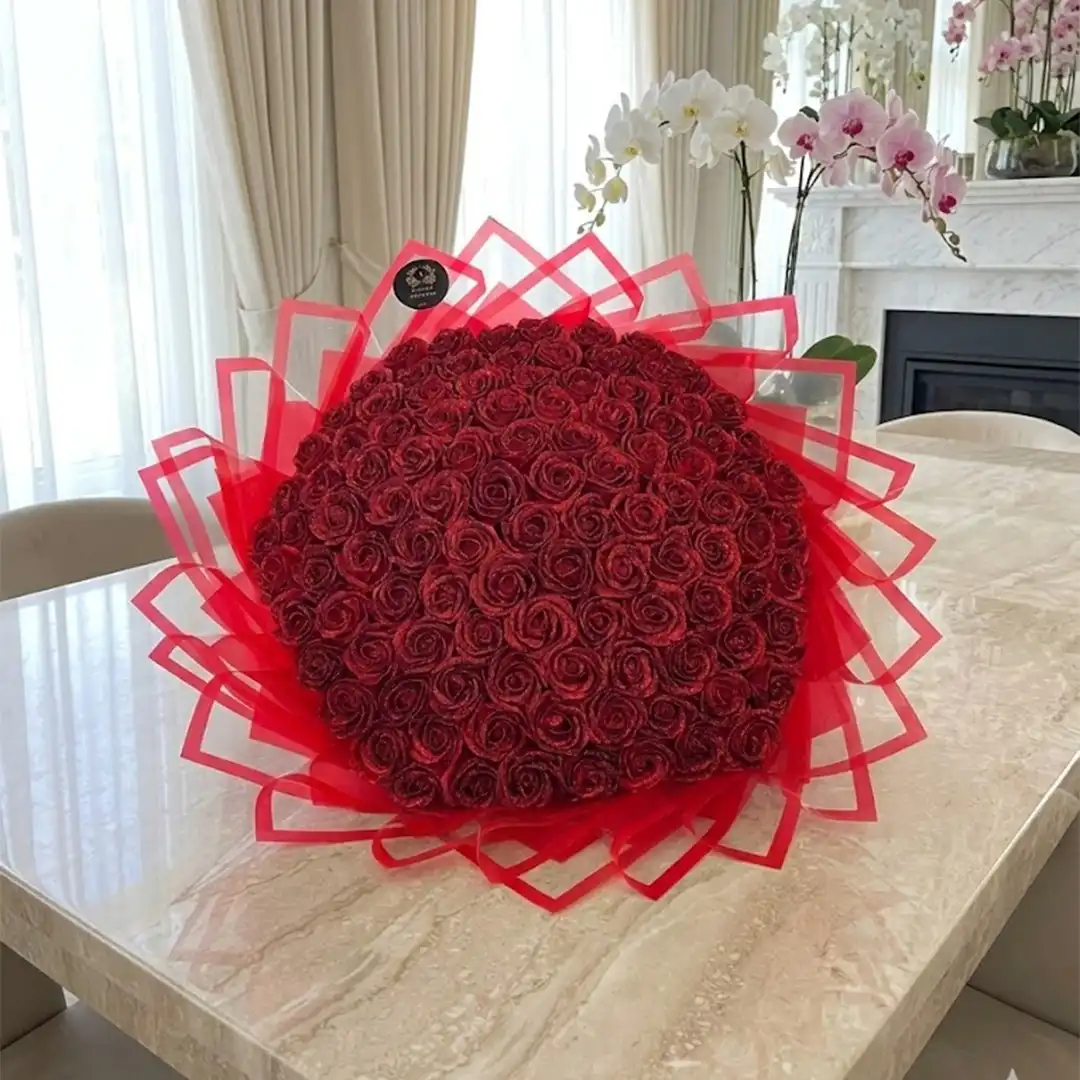
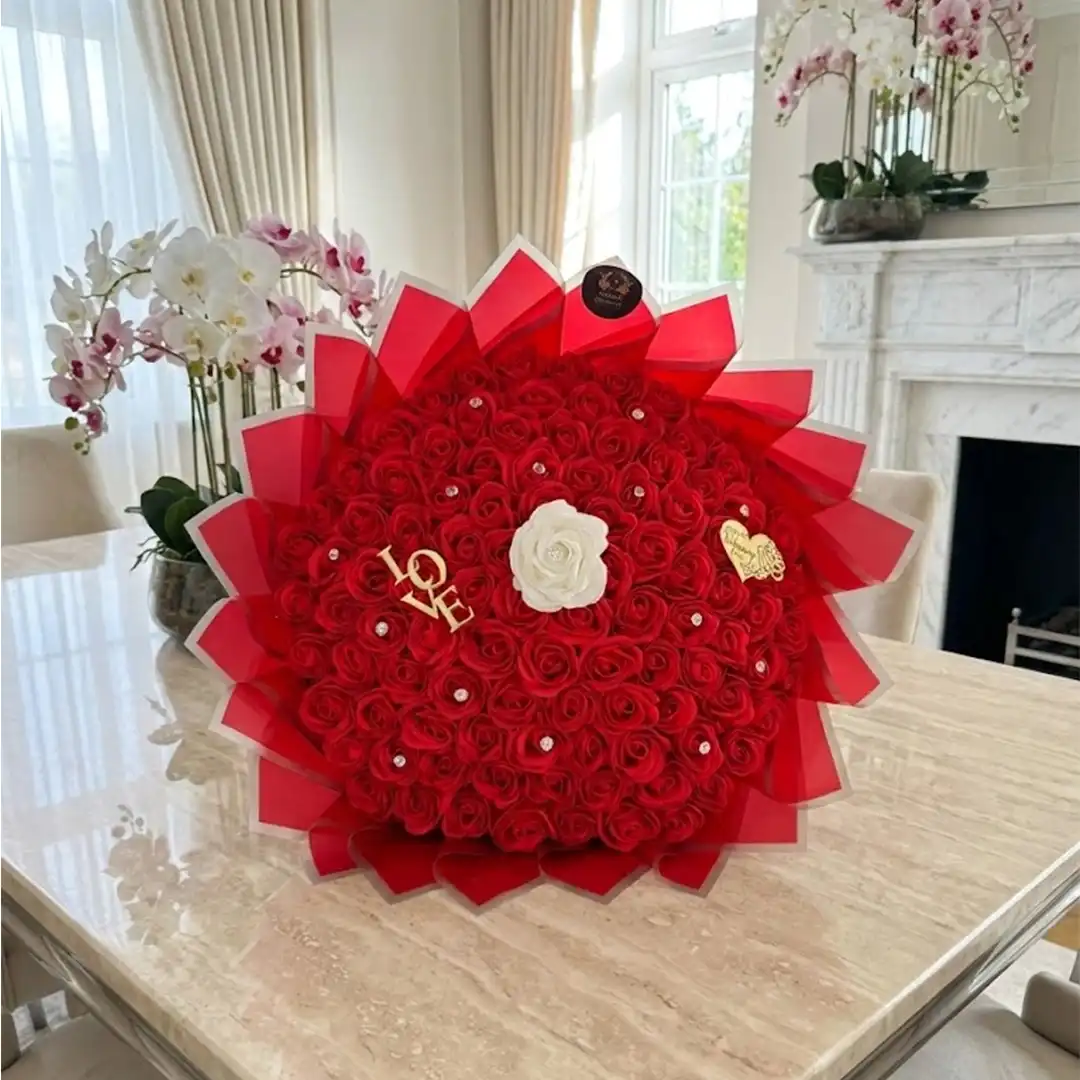
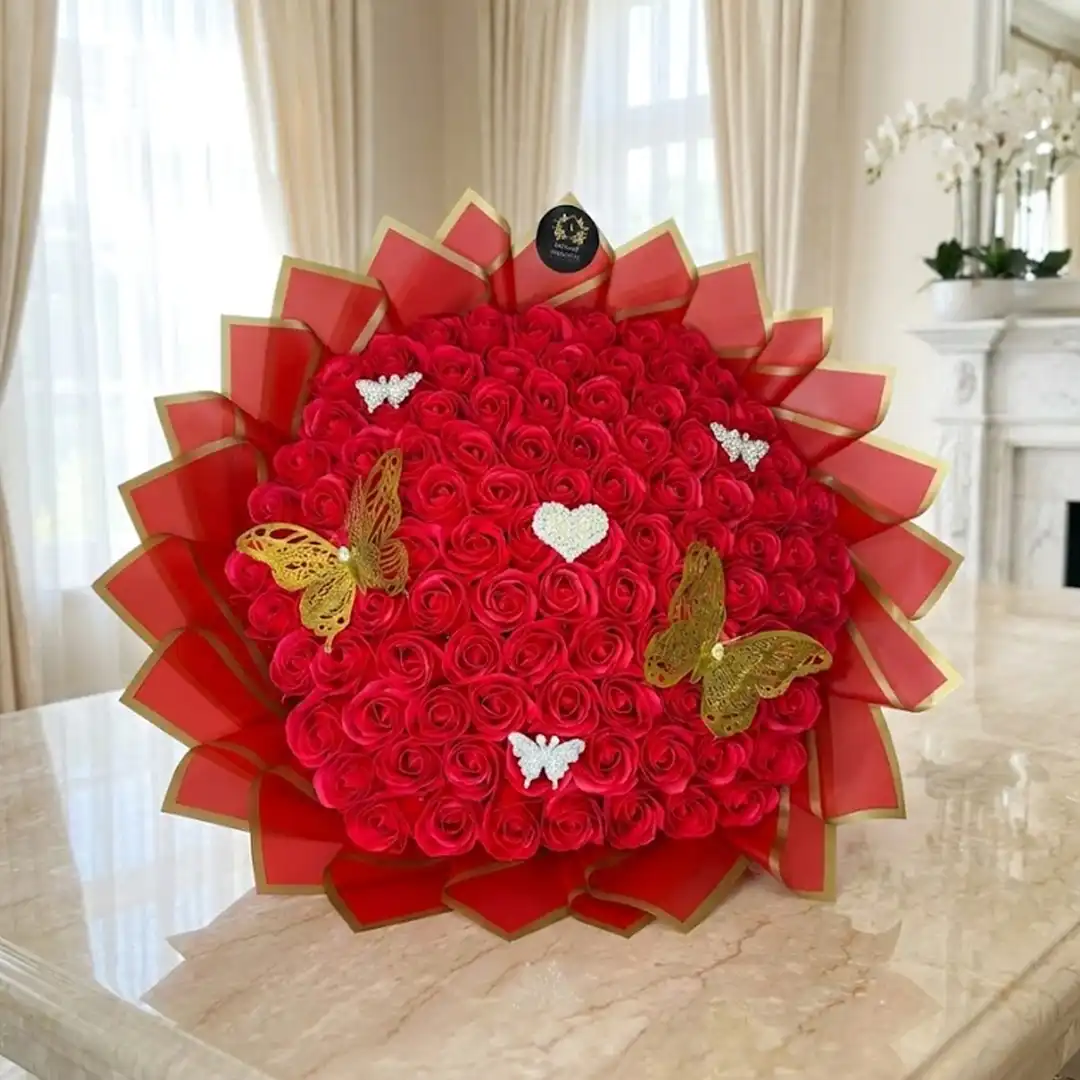
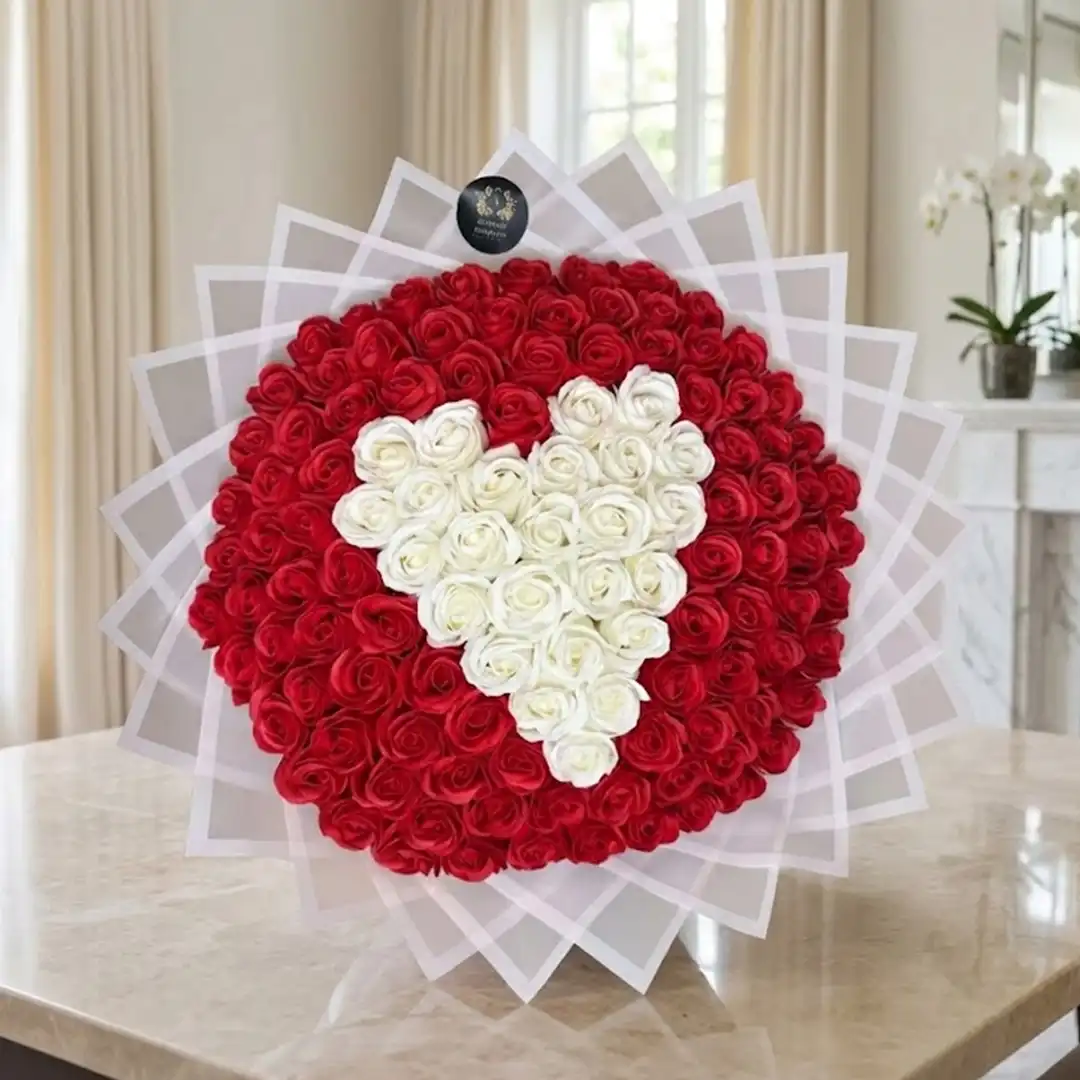
- 50–100 stems: grand gestures, significant anniversaries, weddings
The second error is ignoring the bud stage. Tightly closed buds will open over three to five days, ideal if you’re buying in advance. Half-open roses are at peak visual impact for about 48 hours. Fully open roses look stunning in-store but may not last through the evening. Buy for when the recipient will actually see them at their best, not for how they look at purchase.
| Option | Best For | Key Tradeoff |
| 6 long-stem red roses | Early romance, understated gifting | Can seem modest for major occasions |
| 12 hybrid tea roses | Valentine’s Day, anniversaries | Expected — less surprising |
| 24 garden roses | Weddings, milestone birthdays | Higher cost, shorter vase life |
| Mixed red rose bouquet | Sympathy, general admiration | Less romantic specificity |
| 50+ stem arrangement | Grand gestures, décor | Requires large vase, significant budget |
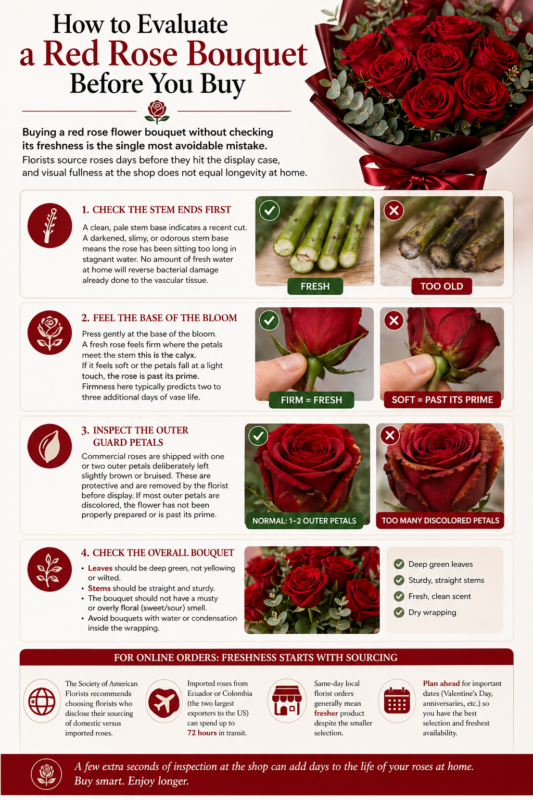
How to Evaluate a Red Rose Bouquet Before You Buy
Buying a red rose flower bouquet without checking its freshness is the single most avoidable mistake. Florists source roses days before they hit the display case, and visual fullness at the shop does not equal longevity at home.
Check the stem ends first. A clean, pale stem base indicates a recent cut. A darkened, slimy, or odorous stem base means the rose has been sitting too long in stagnant water. No amount of fresh water at home will reverse bacterial damage already done to the vascular tissue.
Press gently at the base of the bloom. A fresh rose feels firm where the petals meet the stem. This is the calyx. If it feels soft or the petals fall at a light touch, the rose is past its prime. Firmness here typically predicts two to three additional days of vase life.
Look at the outer guard petals. Commercial roses are shipped with one or two outer petals deliberately left slightly brown or bruised. These are protective and are removed by the florist before display. If most outer petals are discolored, the flower has not been properly prepared or is past its prime.
For online orders, the Society of American Florists recommends choosing florists who disclose their sourcing of domestic versus imported roses since imported roses from Ecuador or Colombia (the two largest exporters to the US) can spend up to 72 hours in transit. Same-day local florist orders generally mean fresher product, despite the smaller selection.
What Changes Depending on Occasion, Recipient, and Season
The “right” red rose bouquet is not the same object across all contexts. Four variables shift the answer significantly.
Occasion formality. A wrapped hand-tied bouquet suits direct gifting it’s designed to be received and immediately placed in a vase. An arranged bouquet in a box or vase is better for delivery, since it arrives display-ready. Sending unwrapped stems to an office, where the recipient has no vase, creates an awkward situation.
Recipient relationship. Red roses sent to a colleague, unless the relationship is explicitly romantic, can create discomfort. For professional admiration or congratulations, a mixed bouquet where red roses are one element rather than the sole feature sends appreciation without the romantic signal.
Seasonal pricing. Red rose prices surge 20–30% in the two weeks around Valentine’s Day, driven by global demand that outpaces supply. Ordering the same bouquet on February 16th costs significantly less and, counterintuitively, may arrive fresher as supply chain pressure drops. If the occasion allows flexibility, timing matters.
Delivery vs. in-person. Roses delivered by courier spend time in a warm vehicle without water a stress test for freshness. Asking the florist for aqua packs (small water-filled sachets attached to the stems) is a reasonable request that most professional florists accommodate and significantly extends transit life.
Mistakes That Shorten a Red Rose Bouquet’s Life
Roses are ethylene-sensitive, meaning they age faster in the presence of ethylene gas, which is emitted by ripening fruit. Placing a bouquet of red roses near a fruit bowl is one of the most common and easily avoided errors, yet most care cards never mention it.
Direct sunlight is the second major killer. It accelerates bloom opening and dries the petals from the outside in. A bright room is fine; a windowsill in the afternoon sun is not.
Tap water without treatment. Commercial flower food sachets (usually included with florist purchases) contain three things: a sugar for nutrition, an acidifier to improve water uptake, and a biocide to prevent bacterial growth. Skipping these, or using only one component, reduces vase life measurably. If no sachet is available, a small amount of sugar and a few drops of bleach in clean water replicates the effect.
Not re-cutting stems. When a stem is cut, the vascular tissue begins to seal within minutes. Re-cutting at a 45-degree angle, not straight across, immediately before placing in water, maximises the surface area for water uptake. This single step, done on receipt and every two days after, is the most impactful thing a recipient can do for longevity.
Storing roses in the refrigerator overnight (away from fruit) adds one to two days of life. Most people don’t know this is an option for cut flowers it works because roses naturally slow their metabolic processes at cooler temperatures.
The Stem-Count Language Nobody Tells You About
Every other article on this topic treats stem count as a budget decision. It isn’t. It’s a communication decision, and conflating the two is why so many rose bouquets miss the mark.
The hidden layer is this: in many cultures, even numbers of flowers are associated with mourning or death, while odd numbers represent life and celebration. This convention is standard across much of Eastern Europe, Russia, and parts of Asia. A buyer ordering a bouquet of red roses for a partner of Ukrainian, Polish, or Korean heritage who sends twelve (an even number) may unknowingly send a culturally inauspicious signal, while thirteen or eleven would carry no such association.
Western florist culture ignores this almost entirely. The industry standardized on twelve because it’s a clean commercial unit, one dozen not because of any emotional logic. There’s a secondary layer: in Victorian floriography, the original meaning system for roses, the way a flower was presented mattered as much as the flower itself. A rose presented upright meant the message should be taken as stated; inverted, it reversed the meaning. While this level of precision has largely fallen out of practice, the underlying principle that how you give flowers carries meaning remains valid. A single rose delivered to someone’s door carries more emotional weight than the same rose handed across a restaurant table, not because of the rose, but because of the deliberate act of delivery.
Choosing a red rose flower bouquet with full awareness of these layers, stem count, number parity, and presentation method turns a transaction into a considered gesture.
From the Field: What Florists Won’t Always Tell You
The hardest thing to say about red rose bouquets is that, past a certain point, adding more stems produces diminishing emotional returns. A 50-rose arrangement is visually spectacular in a photograph and almost impossible to appreciate in a normal domestic space. Most home vases can’t accommodate the volume, and the bouquet ends up divided or crowded, which kills the effect. Experienced florists know this and will often suggest a high-stem-count bouquet only when they’ve confirmed the recipient has the space for it.
The other honest truth: most commercially available red roses, particularly those sold by supermarkets and large delivery platforms, are hybrid tea cultivars selected for shelf life and travel durability, not fragrance or bloom complexity. If scent matters to the recipient, specify fragrant varieties explicitly: ‘Mr. Lincoln,’ ‘Double Delight,’ or ‘Chrysler Imperial’ are classic fragrant reds. A florist who can’t name a fragrant red variety is sourcing purely for logistics, not quality.